


The Failure of 'Drop and Hope': Why Your Anxious Dog Needs a Transition Service in McKinney
- Fetch Me Later Insights Team

- Mar 14
- 13 min read
Updated: 3 days ago
📌 Key Takeaways
Anxious dogs need gradual introductions to boarding—not a single drop-off—because flooding their nervous system with too much stimulation at once can deepen fear instead of building confidence.
Quiet Dogs Aren't Always Calm: A dog who stops moving, eating, or exploring may have shut down from stress, not relaxed into the environment.
One Trial Day Isn't Enough: Adrenaline can hide fear on day one—real stress often shows up by day three when the novelty wears off.
Small Groups Reduce Overwhelm: Facilities that cap playgroups at six dogs or fewer can watch body language and step in before problems start.
Built-In Rest Matters: All-day play sounds fun but can overstimulate anxious dogs—look for places that mix activity with downtime.
Ask How They Spot Stress: Staff should name specific signs like whale eye, lip licking, or freezing—vague answers signal they may miss your dog's cues.
Patience isn't a luxury—it's a safety mechanism for anxious dogs.
Pet parents with fearful or undersocialized dogs will find practical red flags to watch for and questions to ask before booking, preparing them for the detailed facility-evaluation guide that follows.
~ ~ ~ ~ ~ ~ ~ ~ ~ ~ ~ ~ ~ ~ ~ ~ ~ ~
You know the feeling. Your bags are packed, the flight is booked, and your stomach tightens every time you think about leaving your dog behind. Not just any dog—your dog. The one who trembles during thunderstorms. The rescue who took three months to stop flinching when you reached for the leash. The anxious soul who finally, finally trusts you.
And now you're supposed to drop them at a facility full of strangers and unfamiliar dogs, wave goodbye, and hope for the best.
This is what the pet care industry sometimes calls standard boarding—but what anxious dog owners experience as a gut-wrenching gamble. The conventional approach assumes all dogs adapt the same way: leave them, let them "figure it out," pick them up a few days later. For confident, socially flexible dogs, this might work. But for an anxious or fearful dog, this drop-and-hope method can trigger something called psychological flooding—a state of overwhelm that looks like adjustment but actually deepens fear.
There is a different path. A transition service works by introducing the environment gradually, letting your dog set the pace, and building confidence before requiring a full stay. Think of it like sending a shy child to a new school for a half-day first, rather than dropping them at the door and hoping they figure it out. The difference matters. In McKinney, TX, where families often travel for holidays, football weekends, and summer vacations, understanding this difference can mean the difference between a dog who regresses and one who genuinely thrives.
This guide explains why standard drop-off logic fails anxious dogs, what flooding actually looks like, and how to evaluate whether a facility truly prioritizes emotional safety—not just playtime.
Why "Drop and Hope" Feels Fast but Fails Anxious Dogs
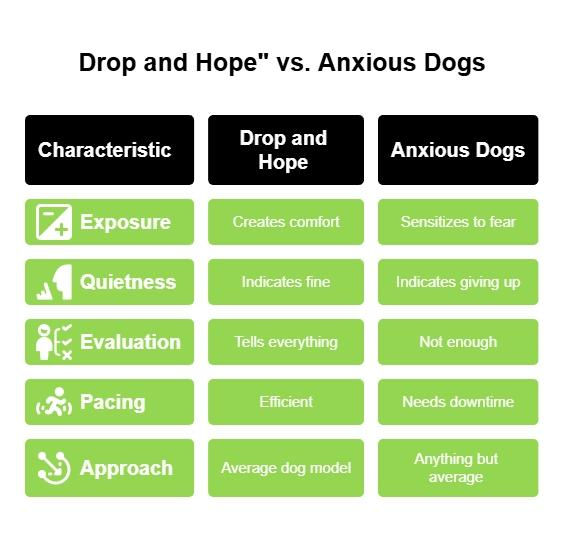
Exposure alone does not create comfort. The drop-and-hope approach persists because it appears to work. Dogs arrive, settle into a routine, and most seem fine by pickup. Facilities run efficiently. Parents get their vacation. Everyone moves on.
But efficiency for humans does not equal emotional safety for dogs—especially anxious ones.
The logic rests on three assumptions that crumble under scrutiny when applied to fearful or undersocialized dogs.
"They'll get used to it." Repeated exposure to an overwhelming situation without adequate support can actually sensitize a dog to fear triggers rather than desensitize them. A dog who "got used to it" may have simply learned to shut down—a survival response, not adaptation.
"If they're quiet, they're fine." Quiet is not the same as calm. A dog who has stopped vocalizing, stopped seeking interaction, and stopped exploring is often a dog who has given up trying to cope. Stillness born from overwhelm looks remarkably like relaxation to an untrained eye. The distinction matters enormously.
"One evaluation day tells you everything." A single visit cannot reveal how a dog will respond after 48 hours of sustained novelty, noise, and social pressure. Adrenaline can mask fear on day one. By day three, the cracks show—refusal to eat, defensive reactions, or complete withdrawal. A trial day is not enough for anxious dogs to demonstrate their true stress threshold.
High-volume facilities often operate on these assumptions because individualized pacing is expensive and time-consuming. All-day play resorts may prioritize constant activity, which sounds appealing but ignores that many anxious dogs need downtime, not more stimulation. Even luxury hotels with human-facing amenities—plush bedding, calming music, webcams—can miss the mark if the underlying approach still floods the dog's nervous system on arrival.
The problem is not bad intentions. The problem is a model built for the average dog applied to dogs who are anything but average.
What Psychological Flooding Actually Looks Like
Psychological flooding occurs when a dog is exposed to more stimulation than their nervous system can process. Unlike gradual desensitization—where exposure increases slowly and the dog remains under threshold—flooding overwhelms the dog's capacity to cope. The result is not learning. The result is survival mode.
According to the ASPCA's guidance on separation anxiety, dogs experiencing fear-based distress often display behaviors that owners and even some professionals misinterpret. The American Animal Hospital Association's (AAHA) Canine and Feline Behavior Management Guidelines similarly emphasize that recognizing the difference between a dog who is successfully acclimating and one who is completely overwhelmed is essential for their emotional wellbeing.
Flooding can look like:
Freezing. The dog becomes still, often in a corner or against a wall. They may appear calm, but their muscles are rigid, their eyes are scanning, and they are not choosing to rest—they are bracing.
Treat refusal. A dog who normally loves food suddenly shows no interest. This is not pickiness. When stress hormones flood the system, appetite shuts down. Treat refusal is one of the clearest indicators that a dog has exceeded their coping capacity.
Shutdown. The dog stops engaging entirely. They do not greet staff, do not respond to play invitations, do not explore. They have withdrawn into themselves because the environment has become too much.
Defensive behavior. Some dogs do not freeze—they escalate. Growling, snapping, or lunging can emerge when a flooded dog feels cornered. This is not aggression as a personality trait. This is fear expressing itself as self-protection.
False calm. Perhaps the most dangerous sign because it looks like success. The dog appears relaxed, lies quietly, and does not cause problems. But their body language tells a different story: whale eye (visible whites of the eyes), tucked tail, ears pinned back, shallow breathing. They are not comfortable. They are enduring.
The Merck Veterinary Manual's entry on behavior problems in dogs notes that fear and anxiety-related responses can persist and worsen without appropriate intervention. A dog who floods repeatedly does not toughen up. They become more sensitized, harder to help, and more likely to generalize their fear to new situations.
This is why separating quiet from comfortable is so critical. A facility that celebrates a "calm" dog without understanding what calm actually looks like may be reinforcing the very trauma you feared.
Why Emotional Safety Has to Come Before Group Fun
The appeal of doggie daycare is obvious: your dog gets to play with friends, burn energy, and come home happily exhausted. For social, confident dogs, group play is genuinely enriching. But for anxious dogs, group play before emotional safety can backfire spectacularly.
Emotional safety means the dog feels secure enough to make choices. They can approach or retreat. They can engage or rest. They are not forced into interaction before they are ready. Without this foundation, group play becomes another source of flooding rather than a source of joy.
The brand worldview at facilities that understand anxious dogs centers on a simple principle: less stress equals more fun. This is not a marketing phrase. It reflects what animal behaviorists have long understood—that arousal and enjoyment are not the same thing. A dog in constant high-arousal play is not necessarily having a good time. They may be overstimulated, unable to self-regulate, and building toward a crash.
What does emotionally safer group care actually look like?
It starts with small groups. When doggie daycare in McKinney caps groups at six dogs or fewer, staff can observe individual body language, intervene before conflicts escalate, and ensure no dog is being overwhelmed by more dominant personalities. Large, chaotic play yards make this level of attention impossible.
It continues with temperament-based grouping. Size matters less than play style and energy level. A mellow large dog may pair beautifully with a calm small dog, while two high-energy dogs of similar size might amplify each other into overstimulation. Matching dogs by temperament rather than just weight creates more balanced interactions.
It requires built-in rest. Dogs need downtime to process stimulation, just like humans. Facilities that rotate play with rest periods—rather than offering nonstop activity—help dogs regulate their nervous systems. This is especially important for anxious dogs, who may not self-select rest even when they need it. The philosophy that high-energy play fails rescue dogs is grounded in this understanding.
It means enrichment matched to personality. Not every dog wants to chase balls. Some prefer sniffing. Some want to walk quietly. Some just want to sit near a trusted human. Offering enrichment options—nature walks, cuddle time, fetch, pool time—allows each dog to engage in ways that genuinely suit them rather than forcing participation in activities that increase stress.
A transition service builds this emotional safety foundation before asking the dog to participate in group dynamics. The dog earns their way into group play by demonstrating readiness—not by being thrown into the deep end and expected to swim.
How a Gradual Introduction Program Works: Assessment, Trial, Stay

A transition service is not extra fuss. It is risk reduction. By breaking the boarding experience into manageable stages, a gradual introduction program allows the dog to build familiarity and confidence before facing the full demands of a stay. This approach uses principles of positive reinforcement and desensitization rather than flooding.
The process typically unfolds in three stages.
Stage One: Assessment. This is where trust begins. You tour the facility, meet the staff, and let your dog explore at their own pace. A temperament assessment helps staff understand your dog's specific triggers, comfort levels, and communication style.
This is also where you evaluate the facility itself. At Fetch Me Later, published trust markers include family ownership by the McGough family, with Denise on-site most days. Denise is a certified pet first aid and CPR instructor, which means staff training extends beyond basic care into emergency preparedness. The location is easy to verify and visit: Highway 380, about three-quarters of a mile west of Custer, at 1943 Private Road 5312, McKinney, TX 75071.
This is also the time to ask practical questions about care: How are dogs grouped? How much downtime is built in? What happens when a dog needs separation from the playgroup? Can the dog bring food and comfort items from home? How are vaccine records verified? Those are not small questions. They tell you whether a facility is built for emotional safety or just occupancy.
Stage Two: Trial Visit. Sometimes called a happy visit, this is a short, controlled exposure—perhaps a few hours of daycare—that builds on the assessment. The goal is not to test whether your dog "passes" but to observe how they respond to the environment without the pressure of an overnight stay. Staff watch for signs of stress and adjust accordingly. The dog experiences the sights, sounds, and smells of the facility while still having the safety valve of going home at the end.
A slow-paced introduction during this stage prevents the adrenaline-masked fear that a single evaluation day cannot detect. That support might include quieter handling, a smaller group, more one-on-one time, or a shorter return visit.
Stage Three: Stay. Only after the dog has begun building genuine confidence—not just surviving visits but showing signs of relaxation—does a full boarding stay make sense. Even then, facilities committed to emotional safety often recommend starting with shorter stays before longer trips. Confidence compounds. A dog who has three successful overnight experiences is far better prepared for a week-long stay than one who has never boarded before.
Published dog boarding in McKinney details reinforce this slower logic. Suites include comfortable Kuranda cots and cozy blankets, fresh chilled water, medication administration for oral or topical medications, and five or more playtimes in yard space with or without friends depending on preference. Families are welcome to bring bedding, toys, blankets, stuffies, and even pictures from home. Packing food from home is encouraged because maintaining the regular diet can help ease anxiety.
This staged approach may take more time upfront. But the investment prevents the behavioral regression that can follow a flooding experience—regression that might take months to undo and that can generalize to other areas of the dog's life.
The Red Flags Checklist: Is a Daycare Safe for an Anxious Dog?
A facility that prioritizes emotional safety will answer direct questions with specificity and confidence. A place that does not may stumble, deflect, or offer reassurances without substance.
Do they talk about emotional safety, not just playtime?
Listen for language that acknowledges not all dogs thrive in high-stimulation environments. If the conversation focuses exclusively on how much fun dogs have and how tired they come home, probe deeper. Ask what happens for dogs who do not want to play. Ask how they define a successful day for an anxious dog.
Do they describe how they pace introductions?
A facility that rushes dogs into group play on day one is signaling their priorities. Look for descriptions of gradual acclimation, assessment periods, and staged integration. The answer should sound like a process, not an event.
Can they explain what stress signals they watch for?
Staff should be able to articulate specific body language cues: whale eye, lip licking, yawning, tucked tail, freezing, avoidance behaviors. If they cannot name these signals, they cannot reliably respond to them.
Do they group by temperament, not just size?
This question separates facilities that truly understand dog behavior from those operating on outdated assumptions. Size-based grouping is easier to manage but ignores the reality that a timid Great Dane and a pushy Chihuahua have very different needs.
Do they build in rest and decompression?
All-day play sounds appealing but can exhaust and overstimulate anxious dogs. Look for structured downtime, quiet spaces, and an understanding that rest is part of care—not a failure to engage.
Do they verify vaccines ahead of arrival through veterinary records?
Health requirements exist to protect all guests. Facilities that obtain vaccine records directly from veterinarians—rather than accepting owner-provided paperwork—prevent the risk of forged vaccination documents. For dogs, this typically includes Bordetella administered every six months (even if the vet gives an annual injection) and Leptospirosis, with canine flu strongly recommended and potentially required based on local respiratory illness conditions.
Can you tour, ask questions, and meet staff before the first stay?
This is perhaps the clearest indicator. A facility that welcomes tours and encourages questions has nothing to hide. A facility that discourages visits or rushes the process may not want you looking too closely.
These questions address the core fear every anxious-dog owner carries: How do I know this place actually gets my dog? The answers—or lack of them—tell you everything.
What Early Success Actually Looks Like for a Stress-Free Daycare Onboarding
Managing expectations matters. A transition service does not transform an anxious dog into a social butterfly overnight. Success looks quieter and more incremental than that—but it is real, and it compounds over time.
Early wins to watch for include genuine shifts in your dog's response to the facility environment.
Your dog is no longer bracing at the door. The car ride to the facility no longer triggers panting, whining, or attempts to escape. Arrival feels routine rather than threatening. Your dog may even show curiosity rather than dread.
Your dog begins taking treats. This is a significant threshold. A dog who accepts food from staff has dropped below their stress ceiling. Their nervous system has calmed enough for appetite to return. Treat acceptance often precedes other signs of relaxation.
Your dog can rest. Not the frozen stillness of shutdown, but genuine relaxation—soft body, loose muscles, willingness to lie down without constant vigilance. A dog who can nap at daycare is a dog who feels safe.
Your dog returns without the same panic. After pickup, recovery time shortens. Instead of days of clinginess or regression, your dog bounces back within hours. The experience is metabolized rather than traumatic.
Your dog's body language loosens instead of freezing. Understanding the difference between shut down and relaxation helps you track this progress accurately. A dog who greets staff with a wagging tail, explores voluntarily, and chooses to engage is demonstrating genuine comfort—not just compliance.
That kind of progress is not theoretical. Published customer experiences include several relevant examples. One reviewer described Dolly, a skittish rescue, feeling more comfortable after a tour and positive staff interaction, then becoming eager to return. Another described Callie, a high-anxiety dog, receiving loving care and special attention during a Christmas stay and coming home without the shaking the family feared. Other reviews describe structured groups and rotations preventing overstimulation, and pet parents feeling as though they were leaving their dogs with a trusted friend rather than a cold facility.
These milestones may arrive slowly. That is okay. The goal is sustainable confidence, not forced performance.
What to Do Before Your First Booking in McKinney
For families in McKinney preparing for travel—whether summer vacations, Thanksgiving gatherings, or holiday trips—starting the transition process early prevents last-minute scrambling. Peak travel windows fill quickly, and anxious dogs benefit from having time to acclimate rather than being rushed through the process the week before departure.
A calm, methodical approach serves everyone better.
Tour the facility first. Walk the grounds. Observe the play areas. Notice how staff interact with dogs already in their care. Pay attention to noise levels, cleanliness, and how dogs are grouped. Your instincts as an owner matter—trust them.
Ask how pacing works. Request specifics about their assessment and trial process. How long do they recommend between first visit and first overnight stay? What happens if your dog shows signs of stress during a trial? The answers reveal whether their approach matches your dog's needs.
Ask how they read body language. Staff should be able to describe what stress looks like and how they intervene. Vague answers like "we can just tell" are not sufficient for an anxious dog who communicates in subtleties.
Verify health requirements ahead of time. Review rates and vaccine requirements before booking. Having your veterinarian's name and phone number ready streamlines the process, since Fetch Me Later obtains records directly from the vet to verify vaccines ahead of arrival.
Decide whether your dog needs transition support before a longer stay. Not every dog requires a full staged process, but anxious dogs almost always benefit from at least one trial visit before boarding. Err on the side of caution. The investment of time upfront prevents the cost of regression later.
Pack comfort items. Bringing familiar food, toys, blankets, and even photos from home helps maintain routine and provides sensory anchors in an unfamiliar environment. Small comforts matter more than we often realize.
If you are ready to explore whether a facility aligns with your dog's needs, scheduling a tour is a low-commitment first step. Meeting the staff, seeing the space, and asking your questions in person builds confidence for both you and your dog. Fetch Me Later, a family-owned pet resort in McKinney operating since 1998, welcomes tours and understands that protective pet parents need reassurance before trust can build.
Lobby hours run Monday through Friday from 8:00 a.m. to 5:30 p.m., with daycare available from 7:00 a.m. to 7:00 p.m. Saturday hours are 8:00 a.m. to 12:00 p.m. The facility is located on Highway 380 between Coit Road and Custer Road—easy to find, easy to visit.
Your dog cannot tell you in words what they need. But their body language speaks clearly—if you know how to listen. A transition service creates the conditions for that communication to happen safely, building confidence one small success at a time.
Patience is not a luxury add-on. It is a safety mechanism. And for anxious dogs, it makes all the difference.
Our Editorial Process:
Our expert team uses AI tools to help organize and structure our initial drafts. Every piece is then extensively rewritten, fact-checked, and enriched with first-hand insights and experiences by expert humans on our Insights Team to ensure accuracy and clarity.
About the Fetch Me Later Insights Team
The Fetch Me Later Insights Team is our dedicated engine for synthesizing complex topics into clear, helpful guides. While our content is thoroughly reviewed for clarity and accuracy, it is for informational purposes and should not replace professional advice.


Comments