📌 Key Takeaways
The first 48 hours of boarding matter most—a calm, quiet start helps your rescue dog’s nervous system settle before the real stay begins.
-
Calm Beats Busy: Dogs need rest and quiet observation time on arrival, not immediate play sessions that can stack stress and backfire.
-
Prep Vaccines Early: Get records sent to the facility weeks ahead—last-minute scrambles add stress for both you and your dog.
-
Pack Familiar Comforts: Bringing your dog’s regular food, meds, and a blanket from home helps maintain routine and eases the transition.
-
Ask for a Gentle Start: Request quiet settling time and specific updates on eating, resting, and body language during the first two days.
-
Watch for Red Flags: Facilities that force immediate group play or can’t answer questions about rest and observation may not prioritize individual care.
A calm start protects your dog’s confidence while you’re away.
Pet parents with anxious or recently adopted dogs will find a practical prep checklist and booking scripts here, guiding them into the detailed planning steps that follow.
~ ~ ~ ~ ~ ~ ~ ~ ~ ~ ~ ~ ~ ~ ~ ~ ~ ~ ~ ~ ~ ~ ~ ~ ~ ~ ~ ~ ~ ~ ~ ~ ~ ~ ~ ~ ~ ~ ~ ~ ~ ~ ~ ~
The suitcase is half-packed. The flight is in three days. And your rescue dog is already watching you with that look—the one that says they know something is about to change.
For pet parents with anxious or recently adopted dogs, boarding isn’t just a logistical checkbox. It’s a decision that sits heavy in your chest. You picture the pacing. The whining. The regression that might undo months of careful trust-building. What if they think I abandoned them?
A calm start is not “extra.” It is often the most practical way to protect your dog’s confidence while you are away.
Here’s what most boarding advice gets wrong: it focuses on what happens during the stay, not on the 48 hours that actually matter most. A Rescue Dog Decompression Protocol isn’t about fancy accommodations or constant play—it’s about giving your dog’s nervous system a chance to catch its breath before the real stay begins.
Why the First 48 Hours Matter More Than the Rest of the Stay
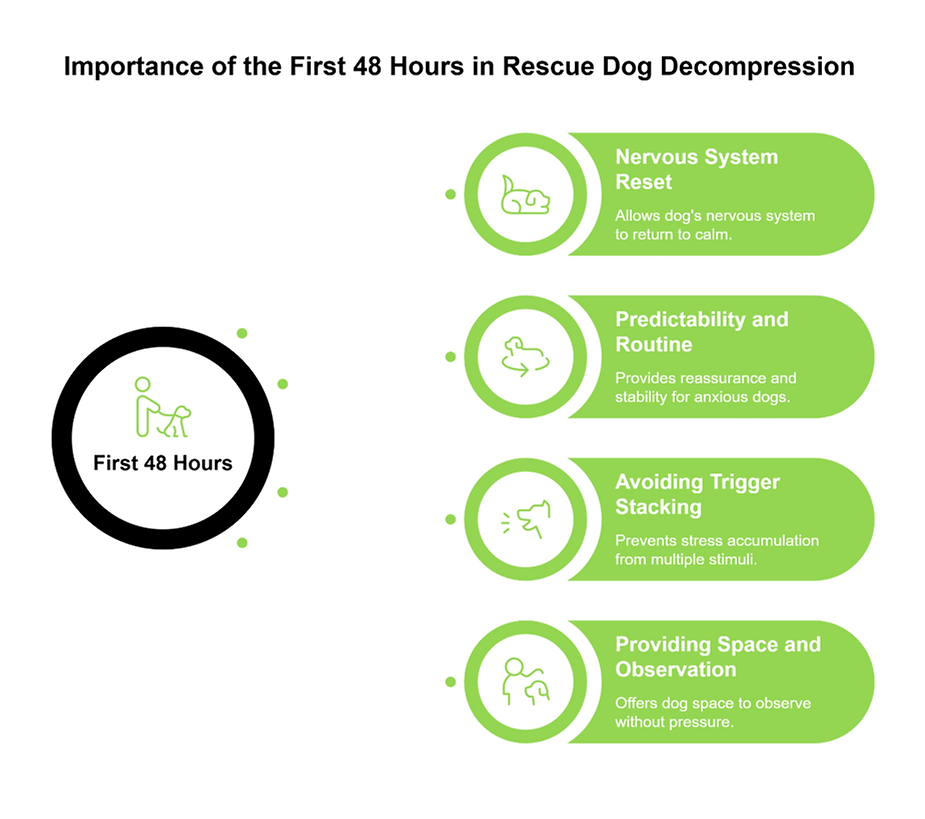
Decompression gives your dog’s nervous system time to reset. When your dog enters an unfamiliar environment, their stress hormones spike. Dogs that have been at the shelter or in boarding for an extended period need to decompress and get themselves back into a calm state of mind. This isn’t weakness or misbehavior—it’s biology.
The first two days set the tone for everything that follows. Predictability is reassuring for dogs, particularly if they’re nervous or anxious. A routine and quiet atmosphere are essential when first taking a dog home, generally for at least a few weeks. The same principle applies to boarding. A calm beginning is more valuable than trying to “make up for” travel stress with activity.
Many pet parents assume a tired dog is a settled dog. Sometimes the opposite is true. The common approach—immediate interaction and constant activity to “tire them out”—often backfires. It can create what behaviorists call trigger stacking: a harmful accumulation of stress from multiple stimuli that can result in difficulty coping and exaggerated stress responses.
Your dog doesn’t need entertainment on day one. They need space, predictability, and the chance to observe their new environment without pressure.
Before You Leave Town: Build a Calm-Start Plan
Confirm Vaccines and Timeline Early
Don’t wait until the week before your trip. At Fetch Me Later, vaccine records are obtained directly from your veterinarian—not handed over at the door. This policy ensures document authenticity and means vaccines must be verified ahead of your arrival, not on drop-off day.
Bordetella must be current within six months, even if your vet administers an annual injection. Leptospirosis is required along with standard core vaccines. Some vaccines need to be administered at least 14 days before boarding if there has been a lapse.
Call your vet now. Confirm everything is current and that records can be sent to the facility. This removes one layer of last-minute stress for both you and your dog.
Pack Food, Meds, and Comfort Items from Home
Bringing your dog’s regular food isn’t just convenient—it helps maintain their routine and can ease anxiety during the transition. Sudden diet changes combined with environmental stress often lead to GI upset.
Pack these essentials:
-
Food portioned into daily servings
-
Oral or topical medications in original containers with clear instructions (note: injectable medications typically cannot be administered at boarding facilities)
-
Comfort items like a favorite blanket, toy, or even a worn t-shirt that smells like home
-
Fetch Me Later welcomes home comfort items and can provide sanitized cots and cozy bedding if you prefer to travel lighter.
Choose the Calmest Room Setup for Your Dog
Not all boarding suites are equal, and the right choice depends on your dog’s personality. At Fetch Me Later’s McKinney location, the options include:
-
Indoor Pool View Suites for dogs who need more privacy or have less interest in outdoor stimulation
-
Patio Suites with 24-hour patio access through a doggie door—good for dogs who like the option to move between spaces
-
Indoor/Outdoor Runs for dogs with higher activity levels who benefit from more space
For a decompression-focused stay, privacy and calm typically matter more than square footage. The key is not choosing the fanciest option—it’s choosing the least friction for your dog.
What to Ask for When You Book
You’re allowed to ask for a gentler transition. In fact, asking clear questions is one of the best things you can do for your dog.
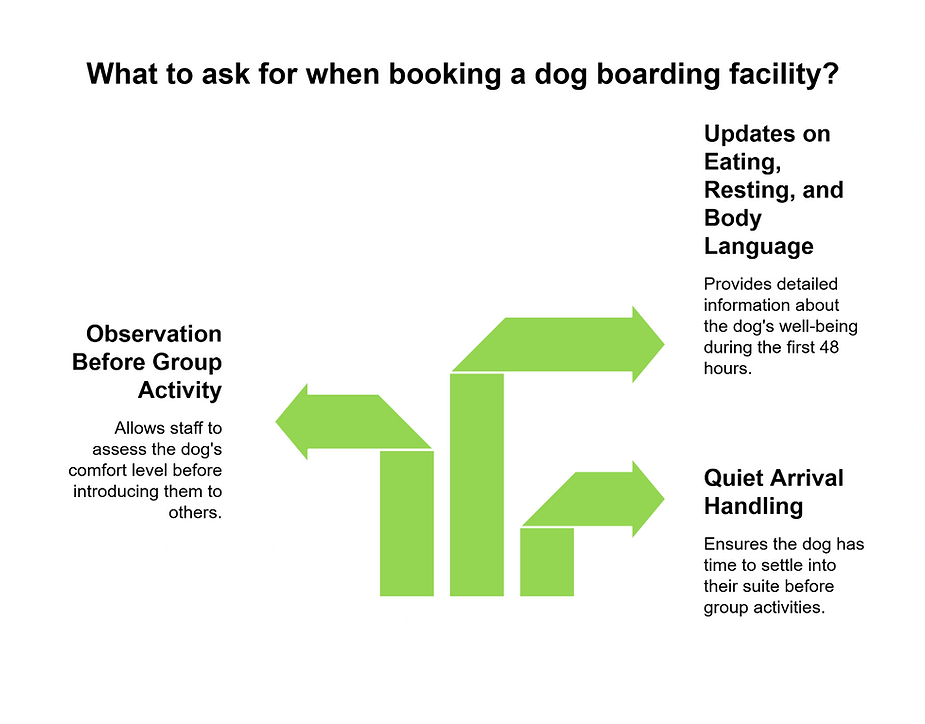
Request quiet arrival handling. Ask that your dog be given time to settle into their suite before any group activity. A good facility will understand that observation comes before play.
Ask about observation before group activity. Will the staff watch your dog’s body language before introducing them to other guests? Dogs who play well at home may need extra time to warm up in unfamiliar settings. Every dog is an individual and will take their own time to feel comfortable in their new environment.
Request updates on eating, resting, and body language. Ask for specific updates during the first 48 hours. Not just “they’re doing great!”—but how they’re eating, whether they’re resting, and how they respond to staff interaction. These details tell you whether your dog is genuinely settling or just surviving.
This is also where trust signals matter. Look for a place that talks about individualized care, not one-size-fits-all activity. Look for clear health and safety processes. Look for signs that welfare comes before convenience. At Fetch Me Later, that includes family ownership, care since 1998, Pet Tech-trained staff, temperature-controlled suites, and a guest-care philosophy built around comfort, supervision, and individualized attention.
Your Copy-and-Paste Decompression Request Script
Use this when you book:
“Hi, my dog can get stressed in new environments, so for the first 48 hours I’d like to prioritize a calm start. Can we plan for quiet settling time, gentle observation, and lower-pressure interaction before any group activity? I’d also appreciate updates on eating, resting, and how my dog is handling the transition.”
And a shorter version for drop-off day:
“Just a reminder: a calm first 48 hours matters for my dog. Please start slow and let me know how they’re eating, resting, and settling.”
You’re not being demanding. You’re being clear—and that helps the staff help your dog.
Day 0: The Drop-Off Routine
Keep Your Own Energy Calm
Dogs read your body language better than your words. If you’re rushing, anxious, or tearful at drop-off, they absorb that energy. Take a breath. Keep your voice steady. Your calm is their cue that this is safe.
Make the Handoff Short and Clear
Long goodbyes don’t comfort anxious dogs—they prolong the stress. Give staff the information they need: feeding instructions, medication details, stress triggers, and what helps your dog settle. Then let the handoff happen. This isn’t cold; it’s kind.
Avoid Stacking Extra Stimulation Before Arrival
Don’t squeeze in a trip to the dog park, a grooming appointment, and a drive-through errand run on the way to drop-off. Each new experience adds to the cortisol load. Let the morning be quiet. A short walk and a calm car ride are enough.
Day 1 to Day 2: What a Good Decompression Start Looks Like
Quiet Does Not Mean Ignored
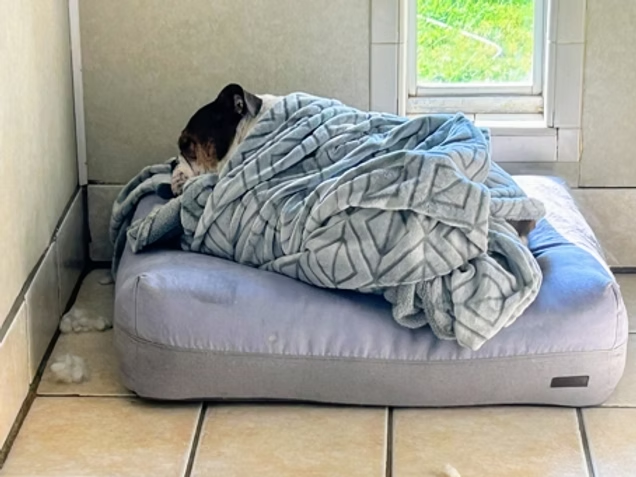
If the facility reports that your dog spent most of day one resting, that’s often good news. Rest is recovery. Even if your dog doesn’t seem tired, they need their crate or quiet space to continue absorbing and decompressing. A good first 48 hours may look boring from the outside. That can be a good sign.
At Fetch Me Later, dogs may go out to play with or without other guests depending on their preference—not on a rigid schedule that assumes every dog wants the same thing.
Rest, Solo Breaks, and Choice-Based Interaction
A decompression-focused facility offers choices. Solo yard time. Quiet enrichments like licky mats or Kongs. The option to observe before engaging. Giving dogs more choices and a sense of control in their lives is one of the most important things we can do for their well-being.
What Updates Should Reassure You
The most reassuring update is not “Your dog played nonstop.” It’s something more grounded:
-
Your dog ate
-
Your dog rested
-
Your dog is moving around more comfortably
-
Your dog is accepting calm interaction
-
Your dog is not escalating when handled
That is the kind of progress many pet parents actually want. Mild appetite reduction on day one is common and not alarming. Continued refusal to eat by day two warrants a check-in.
Red Flags That the First 48 Hours Are Being Handled Poorly
Watch for these warning signs when evaluating a facility:
Immediate forced group play. If the facility assumes every dog wants to jump into social time on arrival, they’re not accounting for individual temperament or stress levels.
No questions about stress signals or history. A good facility asks about your dog’s quirks, fears, and triggers. If they don’t ask, they may not be watching for them either.
No clarity on food, meds, rest, or updates. Vague answers about how medication is administered or how often dogs get breaks suggest a system built for volume, not individualized care.
Language that treats quiet time as punishment. If “calm start” is framed as something dogs earn after proving themselves, the philosophy is backwards. Calmness isn’t a reward—it’s a foundation.
Watch for language like this:
-
“We put all dogs into the same routine right away.”
-
“They just need to play it off.”
-
“We do not really track eating, resting, or stress signals.”
-
“Quiet time means they are being difficult.”
-
“We do not need much history from you.”
A calmer program should sound more nuanced than that. It should leave room for observation, room for adjustment, and room for your dog to settle at their own pace.
Your Pre-Trip Review Checklist
Before your trip, confirm:
-
[ ] Vaccines are current and records can be sent directly from your vet to the facility
-
[ ] You’ve packed food, medications, and comfort items from home
-
[ ] You’ve selected a boarding setup that matches your dog’s need for calm
-
[ ] You’ve communicated your preference for a decompression-first start
-
[ ] You know the check-in and check-out times (review vaccine requirements and check-in timing)
-
[ ] You have a contact number for updates during the stay
If you’re still unsure whether a facility can meet your dog’s needs, request a tour. At Fetch Me Later in McKinney—located on Highway 380 between Coit and Custer—pet parents are welcome to visit and see the 12-acre wooded property, meet the Pet Tech-trained staff, and ask questions about how calm-start accommodations work for their dog.
You can compare boarding options and enrichment details to find the right fit. And if you’re ready to plan your trip, you can submit a reservation request or ask any remaining questions directly.
The trip you’re planning doesn’t have to come with guilt. With the right preparation and the right facility, your dog can have a calm start—and you can have a peaceful trip.
That is often the difference between hoping your dog will adjust and actually planning for them to.
Disclaimer: This article is for educational planning purposes only and is not a substitute for veterinary diagnosis, treatment, or individualized behavior therapy. For urgent medical concerns or severe anxiety/aggression issues, consult your veterinarian or a credentialed behavior professional. Fetch Me Later is a well-care boarding/daycare facility, not a veterinary provider.
Our Editorial Process:
We build this content from documented service policies, on-site operational details, customer experience evidence, and the brand’s stated guest-care standards. We then edit for clarity, factual accuracy, local relevance, and consistency with the brand’s emotional-safety point of view.
By the Fetch Me Later Editorial Team
The Fetch Me Later Editorial Team creates educational resources for pet parents in McKinney and nearby communities, drawing on the resort’s family-owned care philosophy, documented guest-care standards, and day-to-day experience supporting dogs and cats with individualized attention.