
📌 Key Take aways
Investing in calm, specialized pet care builds your dog’s confidence—and makes your whole life easier.
-
Confidence Compounds Over Time: A dog who learns new places are safe becomes more adaptable, social, and easier to care for long-term.
-
Small Groups Reduce Stress: Groups of six or fewer dogs, matched by temperament, help nervous dogs thrive instead of just survive.
-
Tours Reveal the Truth: Watch how staff interact with dogs already there—calm body language and personal familiarity signal genuine care.
-
Health Protocols Protect Everyone: Facilities that verify vaccines directly with vets—not just owner copies—show they take communal safety seriously.
-
Book Early for Busy Seasons: Summer, Thanksgiving, and the winter holidays fill up fast—early planning gives anxious dogs time to acclimate without deadline pressure.
A confident dog doesn’t just board better—it lives better.
Pet parents of anxious or rescue dogs will find practical tools here to evaluate care options, setting up the facility-specific details that follow.
~ ~ ~ ~ ~ ~ ~ ~ ~ ~ ~ ~ ~ ~ ~ ~ ~ ~
The leash is in your hand. Your dog is trembling by the door. And the question circling in your head isn’t really about money—it’s about whether this decision will help your anxious pup or set them back.
That fear is valid. Unlike humans, dogs don’t power through stress. When an environment is too intense, too fast, or too unpredictable, nervous dogs shut down, spiral into avoidance, or come home more reactive than before. A confidence-first approach treats specialized care as risk reduction: fewer setbacks now, and more freedom later. That reframe is worth holding onto before any conversation about cost.
The Question Behind the Question: “Is It Worth It?”
When pet parents ask whether premium care is “worth it,” they’re rarely asking about dollars alone. The real concerns sound more like:
-
Will this break the trust we’ve built?
-
Could one bad stay trigger regression we’ve spent months undoing?
-
Am I signing up for a lifetime of planning around my dog’s limits?
These aren’t overblown worries. According to the ASPCA’s overview of separation anxiety, separation anxiety is one of the most common behavioral issues in dogs, and it can intensify when a nervous dog is placed in an overwhelming environment without proper acclimation. The standard advice—”Just drop them off; they’ll adjust”—doesn’t account for dogs who shut down, refuse treats, or show defensive behaviors when stressed.
For these dogs, too much too fast can backfire. A rushed introduction may reinforce fear rather than build comfort.
Specialized care reframes the purchase. Instead of buying “a stay” or “a day,” the goal becomes protecting long-term emotional stability and building capacity—so daily life expands rather than shrinks. You aren’t just paying for daycare; you are investing in a lifetime of confident adventures.
What “Specialized Care” Actually Means (In Plain English)
Specialized care is not extra pampering. It is an intentional structure designed for dogs whose stress threshold is lower—often rescue dogs, dogs with uncertain histories, or dogs that become overwhelmed by abrupt transitions.
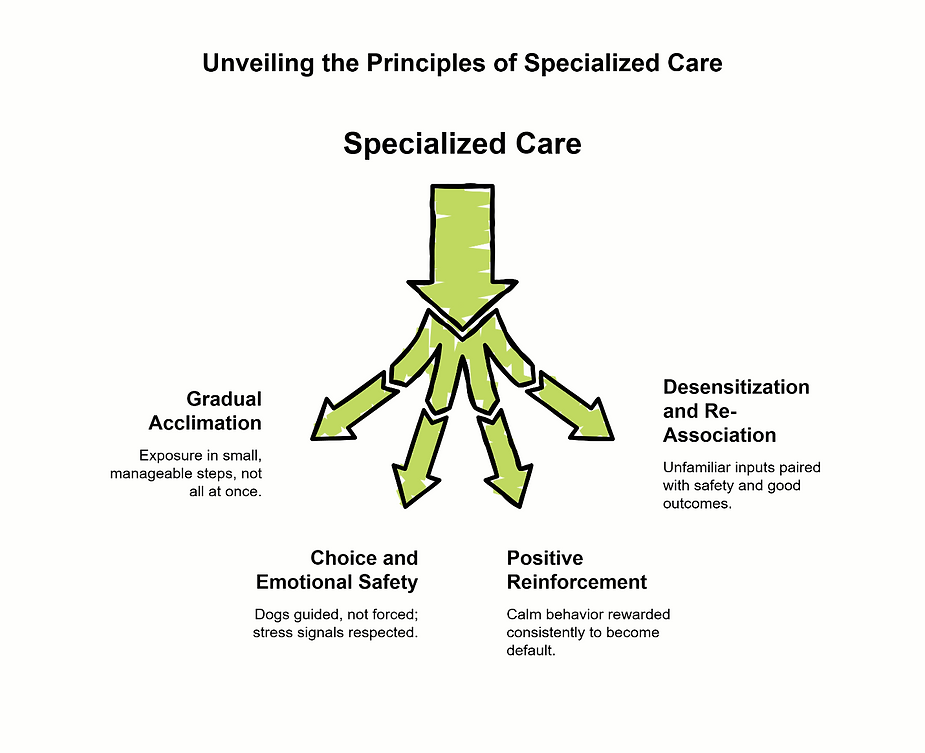
A confidence-building approach rests on four principles, widely endorsed in professional behavior work and reflected in the American Veterinary Society of Animal Behavior’s position statement on humane, reward-based training:
-
Gradual acclimation: exposure in small, manageable steps rather than all at once
-
Choice and emotional safety: dogs are guided, not forced; stress signals are respected rather than overridden
-
Positive reinforcement: calm behavior is rewarded consistently so it becomes the dog’s default
-
Desensitization and re-association: unfamiliar inputs become less threatening because they are paired with safety, predictability, and good outcomes
Instead of throwing a nervous dog into the deep end, a confidence-building transition gently prepares their nervous system for the stimulation of daycare. Short visits become longer ones. Unfamiliar faces become familiar friends.
In practice, this approach includes small group sizes—often no more than six dogs at a time—to reduce overstimulation, enrichment matched to each dog’s personality, rest periods built into the day so dogs aren’t running on adrenaline from open to close, and grouping by temperament rather than just size. The Fear Free initiative describes this philosophy as reducing fear, anxiety, and stress at every touchpoint. When a facility operates this way, the difference shows in the dog’s body language.
The Confidence ROI Calculator
Paying more for specialized, calm-first care is worth it because it reduces anxiety-driven setbacks and builds a dog who can handle daycare, boarding, and real-life outings. In the long run, that often costs less—emotionally and financially—than scrambling to fix fear-based behaviors later.
This approach does not guarantee every dog becomes fearless. Outcomes vary by dog and by program quality. What specialized care does is reduce the likelihood of overwhelm—and protecting progress already made is itself a meaningful return on investment.
Cost of NOT investing in a thoughtful transition:
-
Private behavioral training sessions (often $100–$200+ per hour)
-
Canceled travel plans when no trusted care option exists
-
Restricted lifestyle—avoiding patios, guests, and spontaneous outings
-
Ongoing stress management for both dog and owner
-
The emotional toll of watching your dog struggle
Return on investing in confidence-building care:
-
A dog who walks into daycare or boarding with a wagging tail, not a tucked one
-
Travel freedom—vacations, work trips, and family emergencies handled without panic
-
An expanded daily life: restaurant patios, house guests, and flexibility in routine
-
Genuine, guilt-free peace of mind while away
-
The quiet pride of watching a once-fearful dog thrive
Confidence also tends to compound. Small, well-managed wins lead to bigger wins—especially for dogs that need a gradual, supportive path into social environments. That compounding effect is what makes early investment in a thoughtful transition so valuable.
The Lifestyle Upside: What Changes When Your Dog Is Confident
A confident dog doesn’t just make boarding easier. Confidence ripples outward into daily life.
Travel becomes possible again. Weekend getaways, holiday visits, the work trip you’ve been postponing—all manageable when there’s a trusted place where your dog is genuinely happy. Routine gains flexibility. Dinner at a dog-friendly patio, friends stopping by without a meltdown, mornings that don’t begin with elaborate logistics.
There’s a quieter shift, too: the guilt fades. That low-grade background anxiety of Is my dog okay right now? gets replaced with trust.
Realism matters here as well. Some dogs will always prefer quiet, lower-stimulation settings—and that’s fine. For them, the win may be “calm and safe” rather than “social and outgoing.” Specialized care is valuable either way, because a dog who can cope with change enables a life that keeps moving, rather than one that keeps shrinking.
One pet parent described the transformation this way: her once-anxious pup became an excited visitor. That shift—from anxious to excited—captures exactly what becomes possible.
How to Spot Confidence-Building Care on a Tour
A tour is not just about cleanliness and aesthetics. It’s an opportunity to evaluate whether care practices actually match a confidence-first philosophy. Not every facility that uses words like “premium” or “luxury” delivers genuine confidence-focused care.
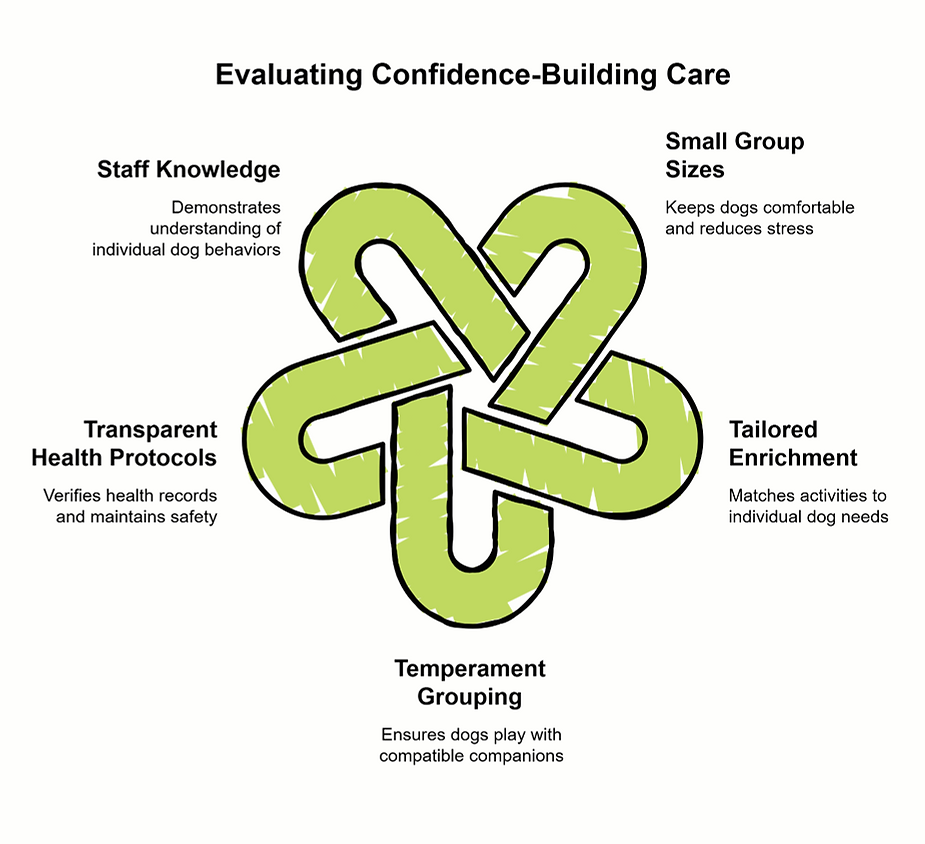
Small group sizes with rest built in. Facilities focused on emotional safety keep groups small—often six or fewer—and rotate play with downtime. Rest periods are part of the care model, not an afterthought.
Enrichment tailored to the individual dog. Look for options like nature walks, pool time, fetch, or quiet cuddle sessions matched to each dog’s personality—not a one-size-fits-all schedule.
Grouping by temperament, not just size. The best facilities assess temperament during intake and match dogs accordingly, so a timid pup isn’t overwhelmed by boisterous playmates twice their energy level.
Transparent health protocols. Fetch Me Later obtains vaccination records directly from each pet’s veterinarian before arrival—not from owner-provided copies—so every record can be independently verified. This policy prevents document forgery and ensures all guests are genuinely protected before they enter a shared environment. Vaccine requirements are also more specific than many pet parents expect: beyond the standard canine vaccines, both leptospirosis and Bordetella must be administered every six months, even when a veterinarian has issued an annual. For background on why leptospirosis warrants particular attention in shared outdoor environments, the Merck Veterinary Manual offers useful context on its zoonotic transmission. Facilities with this level of specificity in their health protocols signal that communal safety is taken seriously—not treated as a checkbox.
Staff who know the dogs by name. During a tour, ask what happens if a dog seems stressed mid-stay. The answer should be specific and calm, not generic. A facility that can describe exactly how stress signals are handled is one that has thought carefully about emotional safety.
Fetch Me Later in McKinney, TX is built around this individualized approach—small group play, enrichment options matched to each dog’s needs, and a family-owned team that has served the community since 1998. Located on Hwy 380 between Coit Rd and Custer Rd, the property offers wooded acres and green fields where dogs can decompress between play sessions. One detail worth knowing for boarding guests: every dog receives a complimentary checkout bath before heading home—a basic shampoo and rinse performed by kennel staff, enough to ensure your pup leaves clean and fresh. It is not a professional groom, and no brushing or de-shedding is included. Professional grooming is a separate paid service, available from the on-staff groomer and conveniently scheduled on checkout day for those who want it. Tours are always welcome, and the staff encourages pet parents to come see the environment firsthand before committing.
A Simple Next Step
High-consideration decisions deserve a low-pressure path forward. A practical sequence: review rates and health requirements, explore doggie daycamp details (small groups, enrichment included), look at dog boarding options for privacy and playtime choices, then request a reservation and share your dog’s specific triggers, comfort signals, and history so staff can prepare appropriately.
Better yet, schedule an in-person tour. Watch how staff interact with the dogs already there. Trust your instincts about whether the environment feels genuinely calm and caring—not just clean and well-decorated.
One practical note: busy travel seasons—summer, Thanksgiving, and the Christmas and New Year’s holidays—book up quickly. Starting a transition plan earlier than peak travel weeks gives both you and your dog time to acclimate without deadline pressure.
The investment in your dog’s confidence is really about what becomes possible afterward: the trips you’ll take, the stress you won’t carry, and the dog who learns that new places can be safe places. That’s the long-term value—and for most pet parents who’ve lived it, it’s worth every bit of it.
Our expert team uses AI tools to help organize and structure our initial drafts. Every piece is then extensively rewritten, fact-checked, and enriched with first-hand insights and experiences by expert humans on our Insights Team to ensure accuracy and clarity.
About the Fetch Me Later Insights Team
Fetch Me Later Insights Team is our dedicated engine of expert research, hands-on industry experience, and deep local knowledge of pet care in McKinney, Texas. We create every piece of content to help pet parents make confident, informed decisions about the safety and happiness of their furry family members.